近期開始寫網誌,決定分享我之前準備美國博班的點點滴滴,其中之一就是英文檢定啦~這是不管學碩博只要想出國念書就躲不了的一關,相信會對想出國的朋友有點幫助哈哈。因為是跟英文有關的分享以下就用英文了哈哈。
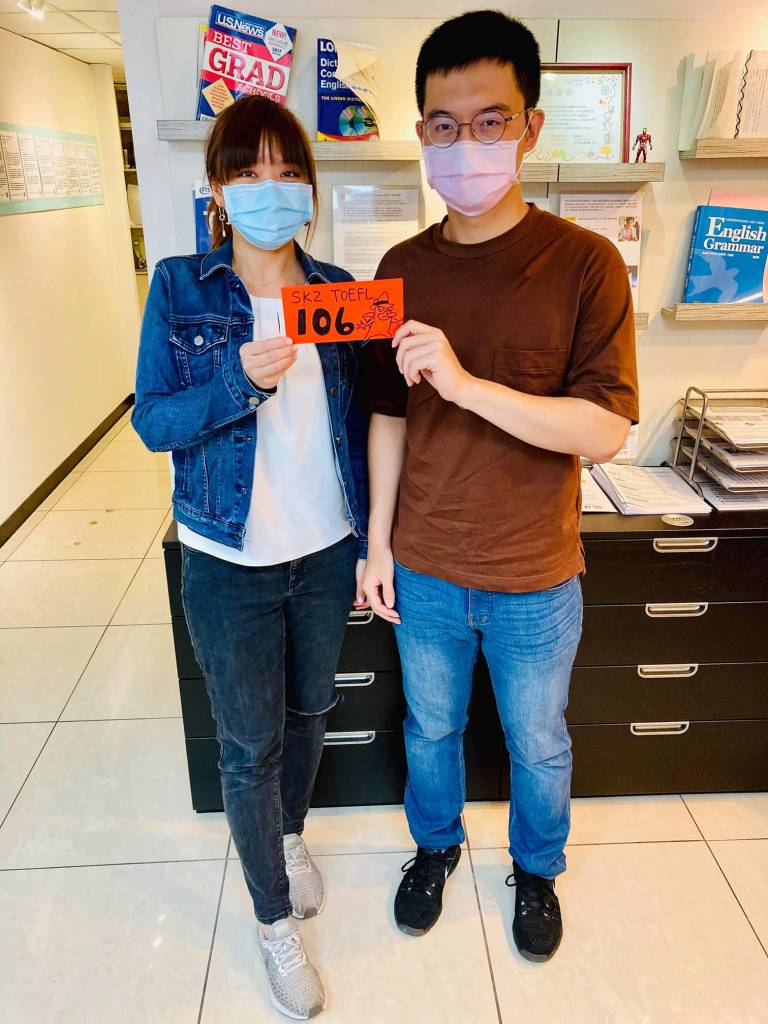
這邊推薦一下SK2 TOEFL,事實證明一個好的補習班真的會讓你事半功倍!(偷偷吐槽一下菁英美日語,我在菁英上了半年都沒什麼長進,來SK2準備兩個月就破百,個人感受差異非常大,不是業配XD)
I’ve recently started blogging and decided to share the ins and outs of my experience preparing for graduate school in the United States, one of which was taking the English proficiency test. This is a hurdle you can’t avoid if you’re planning to study abroad, whether it’s for your Bachelor’s, Master’s, or PhD. I believe this will be somewhat helpful for those who are considering studying abroad. Since I’ll be discussing English-related topics, I’ll be writing in English from here XD
[Test Date & Score]
June 2019, First attempt: 97 (R23/L30/S22/W22)
August 2020, Second attempt: 106 (R29/L29/S22/W26)
[English Proficiency] 15 Level in GEPT, TOEIC 820
[Examinee Status] Employed, preparing for exams
[Preparation Time] January to June 2019 (First TOEFL) + July to August 2020 (Second TOEFL), about 8 months in total.
[Reading]
Reading is the subject where I improved the most, from 23 to 29. I attribute this to test-taking techniques and preparation methods. I will briefly explain the difference between my first and second attempts.
First attempt: Extensive practice + practice reading questions to find answers.
Second attempt: Scan + Skim + intensifying weak question types.
Simply put, during my first attempt, I didn’t have the concept of problem-solving techniques. I purely relied on intuition to find answers after reading the questions. In contrast, during my second attempt, I understood the concept of finding anchor sentences. I knew how to find anchor sentences for different question types and find answers from the context. Moreover, I realized that some questions require a more comprehensive reading of the article to answer, which is quite similar to GRE long difficult sentences and Skim. Hence, I learned more accurately how to simplify sentences in my mind and speed read. I believe these skills contributed to my high score in reading.
Regarding the timeline to learn these skills, I generally followed the study plan set by SK2 TOEFL: practice a specific type of question 10 times a day for the first few weeks, then practice listening 1~2 times a week. Practicing specific question types is vital. For example, my weak point was rhetorical purpose questions, so I spent more time familiarizing myself with how to apply test-taking techniques to these questions. Additionally, during my first attempt, I found myself particularly unfamiliar with humanities and arts questions. So, during practice exams, if there were more natural science questions, I scored high (once I scored 29). If there were more arts questions, I scored low (ex: 22 in the first attempt). After using Scan and Skim to practice and analyze questions, I found that I could make the accuracy rates for humanities and science questions nearly the same. I personally believe it’s because I no longer used prior knowledge (e.g., physics or history) to understand questions, but solely relied on English proficiency to analyze sentences and logic to answer questions.
Finally, before the exam, I could control my total number of wrong questions to within 3. As for scoring 29, that was luck.
[Listening]
The situation with the listening section was quite unique. In my first attempt, I managed to score 30 points largely due to luck, even though my preparation was quite unstable at that time, with mock test scores ranging between 22 and 29.
In preparation for my second attempt, I focused heavily on note-taking skills. I integrated the note-taking structure from SK2 with my own note-taking habits, aiming to develop a method that could keep up with the speed of the speaker. I believe note-taking methods can vary from person to person, so I won’t go into detail about my personal habits here. But one important thing is that notes for the lecture should be segmented, which is something I learned from SK2.
This allowed me to categorize my notes more effectively and find answers more easily when answering questions. As for the eight major points, I paid special attention to the keywords that might appear in multiple-choice questions, as this was a weak point for me.
In terms of study plan, I generally practiced with one conversation and one lecture each day. Additionally, I occasionally watched American dramas and listened to the BBC while commuting to naturally get used to listening to English.
Before the second attempt, I managed to limit the total number of mistakes to three per practice session. Again, scoring 29 points still required a bit of luck.
[Writing]
During my first attempt, I had a good grasp of integrated writing techniques, but I was always lost when it came to independent writing. However, the course from SK2 helped me overcome this problem, leading to a noticeable improvement in my writing (from 22 in the first attempt to 26 in the second).
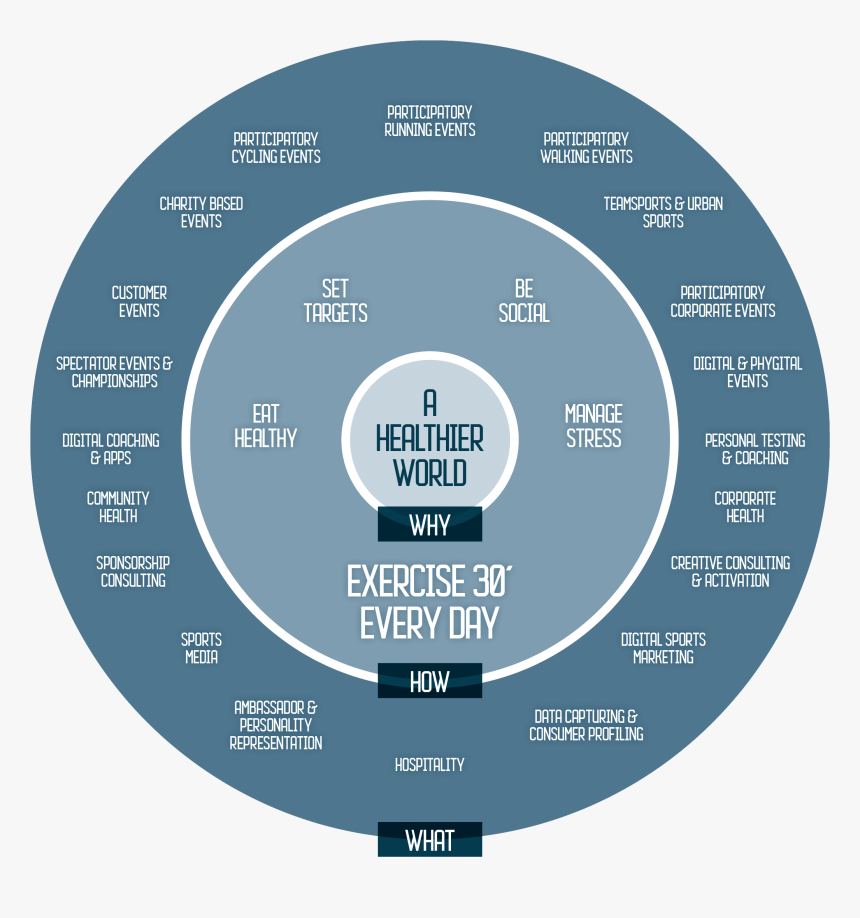
I personally believe that preparing for the writing section is straightforward and the progress is easily observable, provided that you master the correct techniques. In Rosa’s class at SK2, I learned how to use the Word bank and the Golden Circle to generate a complete paragraph. The Golden Circle is a highly practical thinking framework that can structure a well-argued logic, and it is very useful for both speaking and writing. The framework is shown in the figure below. You can create your own Golden Circle and use it as a template to answer various questions.
In terms of practice, I generally wrote one integrated essay and one independent essay per week, in addition to parts 1 to 2.5 of Rosa’s writing exercises. For corrections, I only used Grammarly to revise grammar and sentences, and the rest was to check whether it conformed to the article structure mentioned by the teacher. As for transition words and paraphrasing, I also prepared these specifically two weeks before the exam to make my sentences look more varied and flow more smoothly.
One point worth mentioning is that, compared to my first attempt where I just managed to finish on time, during my second attempt I had about 5 to 7 minutes to check the grammar of the independent task, which helped me avoid losing points due to grammatical errors. I believe this was largely due to the Word Bank assisting me in thinking about points and examples, which made my writing process more efficient.
[Speaking]
Speaking has always been my weak point. Unfortunately, there was no improvement as I scored 22 points both times. However, I personally believe that there were some exam room factors involved. From my subjective point of view, there was a noticeable difference between the first and second attempts, particularly in terms of stability.
Initially, during my first attempt, I didn’t use any framework nor had a word bank. The advantage of this approach was the high degree of freedom; I could say whatever came to my mind. The downside was that I sometimes got stuck and couldn’t speak due to my limited English proficiency. As a result, despite consistent practice, my speaking scores fluctuated between 16 to 21 in mock exams. But during the official first attempt, a microphone malfunction in the exam room allowed me to start speaking later than others. There was almost no disturbance when I spoke, which surprisingly stabilized my performance, allowing me to luckily score 22 points. In contrast, perhaps because my neighboring examinee’s speaking was so impressive during the second attempt, I became particularly nervous, which led me to stutter on the first independent speaking question. Despite this, I still managed to score the same points.
In terms of preparation, I divided it into three main parts: 1) Echo exercises to practice intonation and emphasis, 2) practicing the note-taking structure for questions two, three, and four, and learning how to convert them into speech, 3) practicing word bank and topic sentences, focusing on extensive practice for the first independent speaking question. Additionally, I also had a weekly speaking study group where I continually discussed and refined my skills with classmates.
Admittedly, I didn’t achieve my target score in speaking. If there was anything lacking in my preparation, it might have been the underutilization of the advisor’s time and the study group. If I had taken feedback from the teacher, I might have performed better.
[Conclusion]
I gained profound insights from my two TOEFL attempts. Despite preparing for six months, I didn’t score a hundred in my first attempt. However, in the second attempt, after just two months of preparation, I improved by 9 points. This made me realize the importance of good problem-solving skills to clarify thoughts and effective study methods to improve English proficiency.
Finally, I wish everyone can score a hundred in their first attempt, so you don’t have to take the long way around like I did.
文末Dale偷偷說,Chip太嚴格啦><竟然直接分享英文版!! 如果需要中文版,歡迎留言或是寄信給我~(⸝⸝•̀֊•́⸝⸝)
 Chip & Dale的洛杉磯留學生活
發表留言